
Inspiring Learning Through Play
Educational games and toys are more than just fun — they’re the building blocks of a child’s growth. At Six Bricks Learning, we celebrate the joy of playful education, where every activity enhances learning, imagination, and social connection.
Australia has become a vibrant hub for creative, hands-on learning tools. From colourful bricks to interactive card games, these resources don’t just entertain — they equip children with essential life skills that last well beyond the playroom.
Let’s explore how educational games enrich every part of a child’s development.
Physical Development: Building Coordination and Confidence
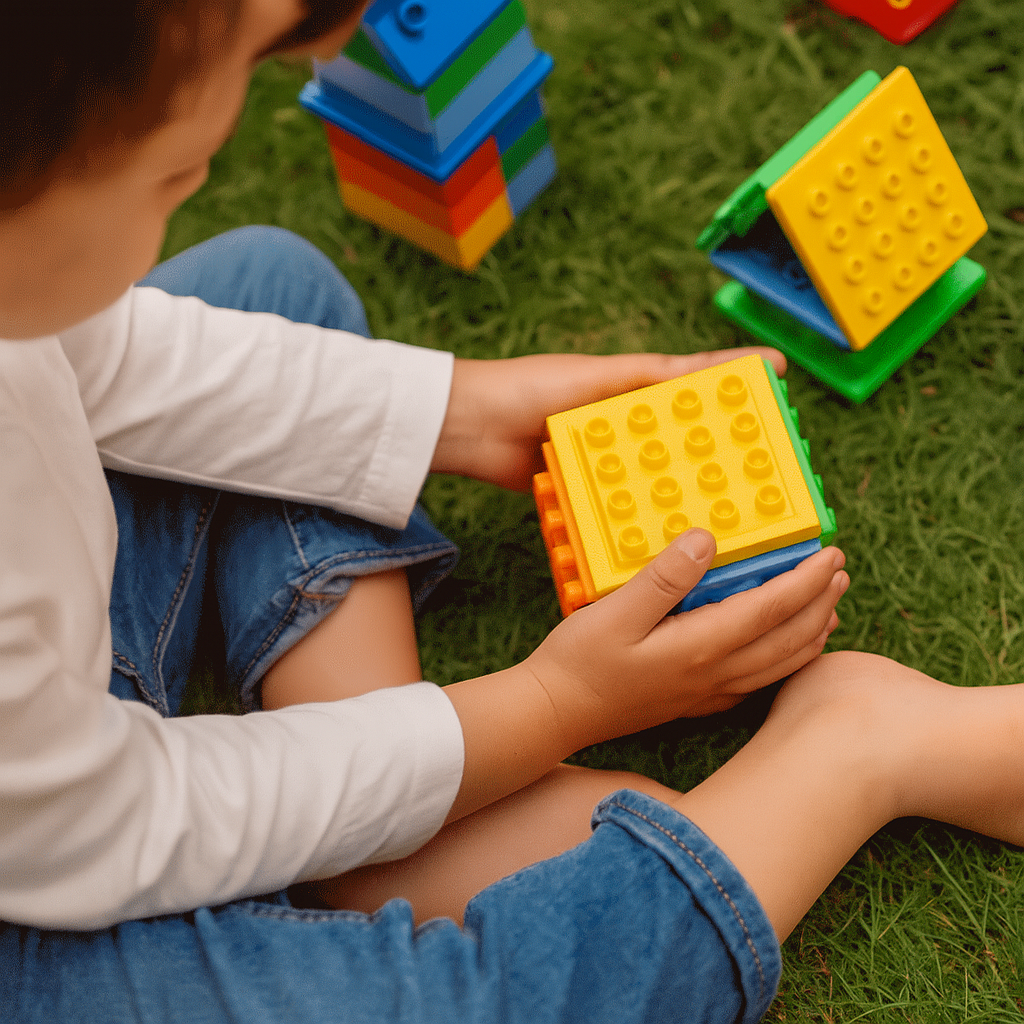
Educational games naturally support physical development by engaging both fine and gross motor skills. Activities involving stacking, sorting, and building with Six Bricks encourage children to:
- Strengthen hand-eye coordination.
- Improve dexterity and grip control.
- Develop balance and movement awareness through active play.
Each time a child builds, rebuilds, or experiments with their creations, they’re refining essential skills while having fun. Play becomes a workout for both body and brain — a perfect foundation for lifelong learning.

Cognitive Development: Learning Through Playful Problem-Solving
Play-based learning is at the heart of cognitive growth. With Six Bricks activities, children learn to:
- Plan and sequence tasks logically.
- Solve problems creatively.
- Experiment and analyse outcomes.
Whether it’s replicating a pattern or designing something entirely new, each task strengthens critical thinking and decision-making skills. Children learn best when they’re engaged, curious, and free to explore — and Six Bricks provides that exact environment.

Social-Emotional Development: Growing Together
Play is also a powerful social teacher. Group games and cooperative activities foster:
- Teamwork and sharing.
- Turn-taking and patience.
- Conflict resolution and empathy.
Six Bricks and other Australian educational games encourage meaningful interaction between children, teachers, and parents. Through laughter, competition, and collaboration, children develop emotional awareness and social confidence — vital skills for life inside and outside the classroom.
Language and Communication: Words Come Alive Through Play
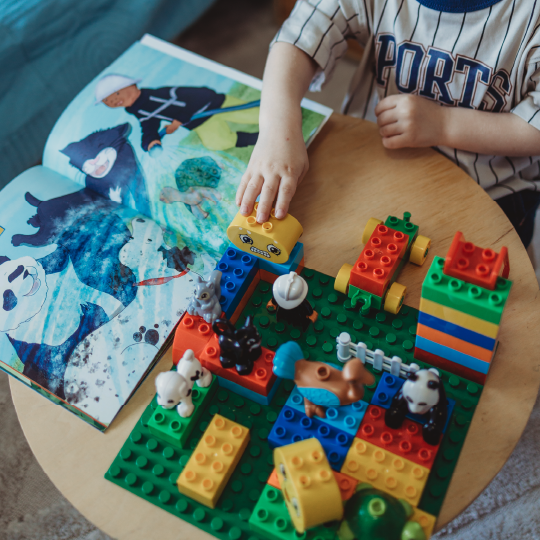
When children play, they talk, narrate, and imagine. This naturally strengthens language development.
- Activities such as storytelling with bricks, matching words and images, or describing colours and actions expand vocabulary and expressive ability.
- Play also promotes listening, turn-taking, and comprehension, creating a strong foundation for early literacy and effective communication.
FAQ
Q: Are educational games suitable for all age groups?
Yes. While Six Bricks is ideal for ages 3–7, the principles of play-based learning benefit children (and adults) of all ages.
Q: How do Australian educational games differ?
They focus on creativity, inclusivity, and real-world learning, encouraging exploration over memorisation.
Q: Can Six Bricks be used at home?
Absolutely. Families can easily integrate Six Bricks activities into daily routines for fun, skill-building play.
About the Author
Six Bricks Learning promotes playful, evidence-based education through hands-on tools and resources. Our mission is to make learning joyful, inclusive, and effective for every child.
Transform Learning with Play
Explore our Australian-designed educational games and Six Bricks resources today. Transform learning time into a creative adventure where play leads the way.
Explore Educational Games