

Working memory is one of the most important building blocks of learning. It allows children to hold information in their minds while they process, understand, and apply it. Without strong working memory skills, even simple learning tasks can become overwhelming.
In early childhood education, working memory plays a central role in reading, mathematics, problem-solving, and following instructions. Fortunately, play-based learning tools such as the Six Bricks Method provide an engaging way to develop these skills naturally.

What Is Working Memory?
Working memory refers to the brain’s ability to temporarily store and manipulate information while completing a task.
For children, this might include:
- Remembering instructions while carrying them out
- Holding numbers in mind while solving a math problem
- Remembering the sounds letters make while reading
- Recalling patterns or sequences in learning activities
Working memory involves both auditory memory (what we hear) and visual-spatial memory (what we see and imagine). Children constantly use these two systems together as they learn.
Why Working Memory Is Essential for Learning
Strong working memory helps children manage the flow of information they receive during learning. They must be able to retain earlier information while new information is being introduced.
For example, when solving a word problem in mathematics, a child needs to:
- Listen to the problem
- Identify important clues in the language
- Remember the numbers involved
- Decide which mathematical operation to use
If working memory is weak, a child may forget key pieces of information before the problem can be solved. This can make tasks such as following multi-step instructions, completing classroom activities, understanding reading passages, and solving maths problems much more challenging.
Signs a Child May Be Struggling with Working Memory
Children with weak working memory often:
- forget instructions easily
- lose track of what they were doing
- struggle to follow multiple steps
- appear distracted or disengaged
- have difficulty completing tasks independently
This is not a reflection of intelligence. Many children with strong reasoning skills still experience challenges with working memory. The good news is that working memory can be strengthened through structured, playful practice.

The Role of Auditory Working Memory
Auditory working memory helps children hold sounds and spoken information in their minds. This skill is particularly important for:
- learning letter sounds
- sounding out new words when reading
- remembering instructions given verbally
- developing language comprehension
For example, when learning to read, children must remember the sounds that individual letters represent while blending them together to form a word. Without strong auditory working memory, this process becomes much harder.
The Role of Visual-Spatial Working Memory
Visual-spatial working memory allows children to remember and manipulate visual information. This is essential for:
- recognising written words
- remembering spelling patterns
- solving puzzles and spatial challenges
- understanding mathematical patterns and sequences
When children can visualise patterns and structures, they begin to see connections in numbers, shapes, and relationships. These abilities are key foundations for mathematics, reasoning, and problem solving.
Why Pattern Recognition Supports Learning
The ability to identify and reproduce patterns is closely connected to working memory. When children recognise patterns in numbers or sequences, they are able to:
- predict what comes next
- understand mathematical relationships
- remember formulas or procedures more easily
Pattern recognition also strengthens the ability to sequence information, which is critical for reading, storytelling, and logical thinking.
How Six Bricks Supports Working Memory Development
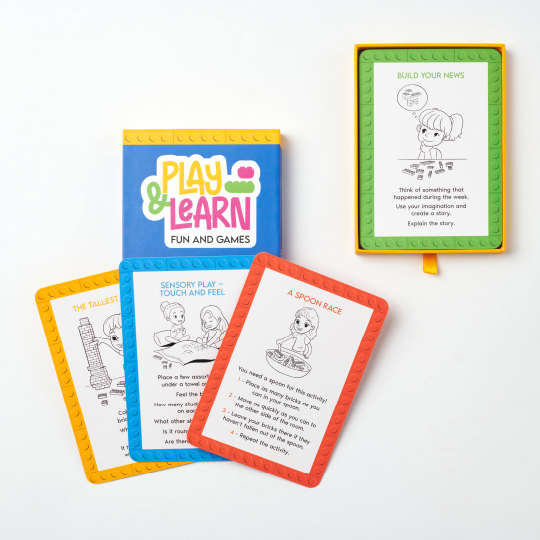
The Six Bricks Method is a powerful play-based learning approach that strengthens working memory through short, structured activities.
Using just six coloured bricks, children participate in quick challenges that require them to:
- remember sequences
- recreate patterns
- follow instructions
- visualise spatial relationships
These activities naturally activate both auditory and visual working memory systems. Because the activities are playful and hands-on, children remain engaged while exercising important cognitive skills.
Examples of Six Bricks Activities That Strengthen Working Memory
Pattern Recall
An educator builds a short pattern using the six bricks. Children observe it briefly, then recreate it from memory. This strengthens visual memory, attention, and sequencing skills.
Colour Sequence Challenge
Children listen to a sequence of colours spoken aloud and then recreate the order using their bricks. This activity strengthens auditory working memory and listening skills.
Copy and Extend
Children copy a pattern and then extend it logically. This builds reasoning, pattern recognition, and predictive thinking.
Follow the Steps
An educator gives multi-step instructions such as: “Place the red brick on top of the blue brick, then add the yellow brick beside it.” Children must remember the sequence while completing the task. This strengthens the ability to hold and manipulate information simultaneously.
Why Play-Based Practice Works
Traditional exercises designed to strengthen memory can sometimes feel repetitive or stressful. Play-based approaches such as Six Bricks offer a more effective alternative because they:
- keep children motivated
- reduce anxiety around mistakes
- allow repetition without boredom
- integrate physical movement with thinking
Through repeated playful challenges, working memory gradually becomes stronger.
Key Takeaways
- Working memory is a critical skill that supports learning across many areas.
- Children rely on working memory to follow instructions, solve problems, read fluently, and understand mathematical relationships.
- Both auditory and visual-spatial working memory are essential for academic success.
- The Six Bricks Method provides a simple, engaging way to strengthen these skills through short, hands-on learning activities.
- When children build, remember, sequence, and recreate patterns, they are not just playing — they are strengthening the mental foundations for learning.
About the Author
Six Bricks Learning supports educators and families in building essential cognitive and developmental skills through structured, play-based learning methods used in classrooms and homes around the world.
Strengthen Their Foundation
Discover how Six Bricks activities can support working memory, attention, and problem-solving skills in children. Explore our resources and training to learn how playful learning can strengthen the foundations for lifelong success.
Explore Resources & Training