

Neurodiversity exists in every classroom. Some children naturally seek movement, while others need predictability. Furthermore, many communicate in unique ways. Therefore, inclusive practice isn’t about creating “one special activity” for a single child. Instead, it is about designing play that works for many learners from the very start.
The Six Bricks Method serves as an ideal tool for neurodiverse play. It is hands-on, has low language demands, and scales easily. Consequently, these short activities “wake up the brain” through movement, memory, and creativity.

Why Neurodiverse Play Needs a Different Lens
In the early years, play is not simply a break from learning; it is how learning happens. In fact, Australia’s EYLF V2.0 strongly emphasises intentional play-based learning. It also recognises children as capable learners with agency.
For neurodivergent children, such as autistic children and those with ADHD, the “best” play experiences often share three specific features:
- Predictability: A clear start and finish.
- Choice: Multiple ways to participate.
- Sensory-safe options: Movement, quiet, or tactile engagement.
These features align closely with Universal Design for Learning (UDL). Specifically, UDL promotes multiple means of engagement, representation, and action/expression.
How Six Bricks Supports Inclusive Neurodiverse Play
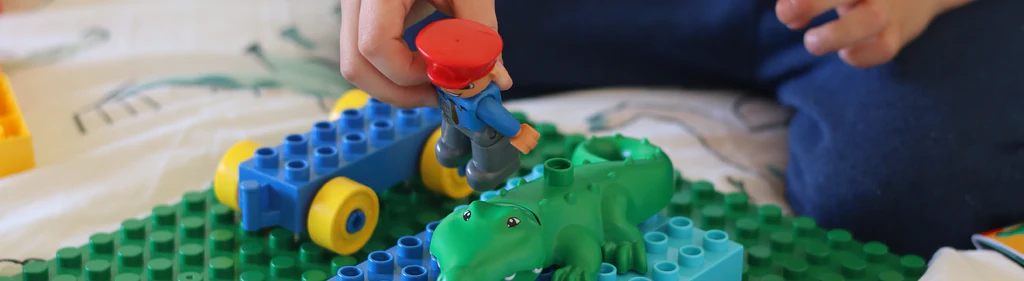
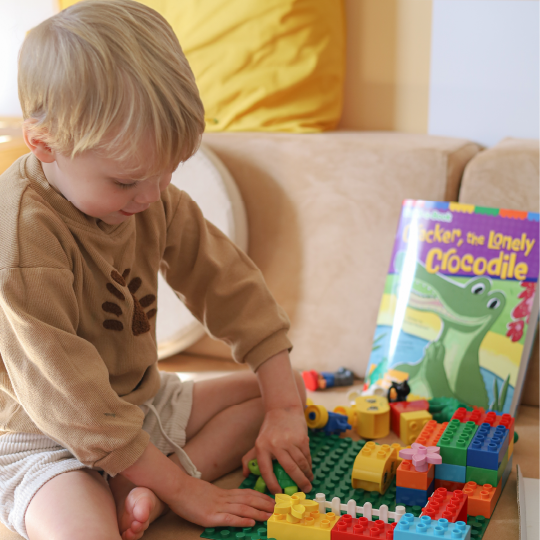
Six Bricks is a pedagogical approach developed by Care for Education in partnership with the LEGO Foundation. It centers around short, simple activities using six DUPLO®-sized bricks in six colours.
It supports neurodiverse learners by offering:
- Low language entry points (copy, build, sort, match).
- Regulation through rhythm (repeatable micro-routines).
- Executive function practice (working memory, inhibition, flexible thinking) through playful challenges.
Illustrative “Classroom Snapshot”
Over 10 school days, an educator runs a 6-minute “Brick Break” routine using the same sequence daily. In a mixed group of 18 children, including neurodivergent learners, the educator tracks key metrics. These include time-to-settle after transitions, participation rates, and peer conflicts during the first learning block.
Result: By week two, transitions became faster and avoidant behaviours decreased. This was especially true when children could choose a “quiet build” variation. (Note: This is an observational example to show measurement, not a clinical claim.)
A Simple UDL Planning Template for Six Bricks Sessions
You can use this template to plan any neurodiverse-play activity:
- Multiple means of engagement (motivation): Offer two versions, such as a “fast challenge” versus a “slow build”. Also, use “first/then” language and visual cues.
- Multiple means of representation (instructions): Show the model rather than just explaining it. Additionally, use colour cues like “Start with red”.
- Multiple means of action/expression (participation): Allow children to build, point, sort, mirror, or direct a partner.
Ultimately, UDL guidance for early childhood supports this kind of proactive design.
5 Six Bricks Activities Designed for Neurodiverse Inclusion
1. Copy Me (low language, high success)
The child copies a 3–5 brick model. Skill focus: attention, visual memory, and confidence.
2. Traffic Lights (regulation + inhibition)
Red means freeze, Yellow means build slowly, and Green means build fast. Skill focus: impulse control and body regulation.
3. Choice Boards (agency)
Offer 3 cards: “build a tower,” “make a pattern,” or “sort by colour.” Skill focus: autonomy and reducing demand stress.
4. Partner Mirror Build (safe collaboration)
One child builds while the other mirrors, then they swap roles. Skill focus: turn-taking and communication without pressure.
5. Calm Corner Bricks
Quiet, repetitive stacking combined with a breathing count. Skill focus: sensory regulation and self-management.
Learn More
Key Takeaways
- Neurodiverse play works best when you design it for choice, predictability, and sensory safety.
- Six Bricks supports inclusive participation because it remains hands-on and scalable.
- Finally, UDL offers a practical framework to plan play that fits more learners from the start.
FAQ
What age is this best for?
Typically 3–7, but you can easily scale complexity for older learners.
Is this only for autistic children or ADHD?
No—UDL-style play supports all learners, including neurotypical children.
How long should sessions be?
Start with 5–10 minutes daily. Short consistency beats occasional long sessions.
About the Author
Six Bricks Learning shares practical, play-based strategies. We support inclusive development across early childhood settings and homes.
Start an Inclusive Routine
Do you want an inclusive routine you can run tomorrow morning? Start with a 6-minute Six Bricks “Brain Wake-Up” and build from there.
Explore Activity Cards