
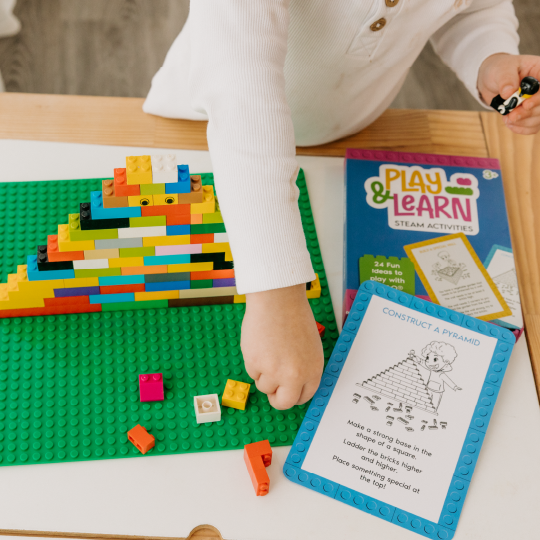
It turns out that math for preschoolers doesn’t have to be worksheets and flashcards. In fact, the best way to nurture a love for numbers and logical thinking is by inviting children into a world of colorful play and imagination—right on the living room floor. With a few household toys, a sprinkle of creativity, and tools like Six Bricks, children can build foundational numeracy skills through joy, not pressure.

Why Play-Based Math Works for Preschoolers
According to research from the LEGO Foundation and the Harvard Center on the Developing Child, early math concepts are most successfully grasped when embedded in interactive, meaningful play. Children are naturally curious and learn best when they’re physically engaged, emotionally connected, and mentally challenged—exactly what playful math activities provide.
The benefits go beyond numbers:
- Boosts cognitive flexibility and memory
- Builds early problem-solving skills
- Strengthens fine motor coordination
- Fosters persistence and attention span
- Prepares children for formal schooling
Let’s dive into playful math activities you can start today.
1. Build-a-Tower Counting Game
What you need: DUPLO® or LEGO® bricks, dice, and a flat surface.
Activity: Roll the dice. Ask your child to build a tower with that many bricks. Encourage counting out loud with each added brick.
Skill focus: Number recognition, one-to-one correspondence, hand-eye coordination.
Level up: Use two dice for numbers beyond 6. Add a timer for excitement and speed practice.
💡 Pair with: “Let’s Get Started” Card Deck from Six Bricks – includes guided activities for ages 18 months+ using bricks you already have.
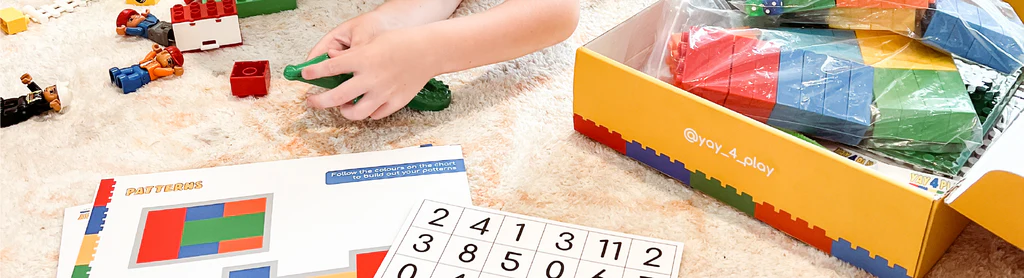
2. Color & Pattern Paths
What you need: Colored bricks or buttons, a printable grid or masking tape lines on the floor.
Activity: Create a color sequence (e.g., red-yellow-red-yellow) and have your child replicate it. Then challenge them to extend it or invent a new one.
Skill focus: Pattern recognition, sequencing, prediction.
Teaching Tip: Ask, “What comes next?” to stimulate mathematical thinking.
💡 Enhance with: “The World Around Us” Card Pack – sustainability-themed pattern and logic activities using bricks.
3. Jump & Count
What you need: Soft floor space and paper numbers taped to the floor.
Activity: Call out a number. Have your child jump to the number and shout it aloud. Vary the activity with number addition (e.g., “Jump to 2 + 3!”).
Skill focus: Gross motor skills, auditory processing, basic addition.
Why it works: Movement locks in learning. According to the Journal of Experimental Child Psychology, kinesthetic math improves memory recall.
4. Story Time with Math Moments
What you need: A math-integrated storybook or Six Bricks Build-a-Book like “Cracker, the Lonely Crocodile”.
Activity: As you read, pause to count characters or objects, compare sizes, and guess what happens next using logic.
Skill focus: Comparative language (more/less), counting in context, emotional reasoning.
💡 Why use Cracker? Every page prompts children to build a new scene, weaving literacy and numeracy seamlessly.
5. Snack Time Sorting & Graphing
What you need: A mix of colorful snack items (grapes, crackers, etc.) and a muffin tray or plates.
Activity: Sort the snacks by type or color. Then “graph” them in rows to compare quantities.
Skill focus: Sorting, grouping, visual representation of data.
Fun twist: Let them eat the items one category at a time as a reward.
6. Pattern Dance Party
What you need: Music and simple movement cards (clap, stomp, jump, twirl).
Activity: Create a movement pattern like “Clap-Clap-Jump.” Repeat and add steps to form a chain. Let your child take the lead!
Skill focus: Memory sequencing, pattern fluency, rhythm.
Make it cross-curricular: Tie this into music or phonics learning.
7. Count-and-Find Scavenger Hunt
What you need: A list (or pictures) of household items in various numbers (e.g., 3 spoons, 4 socks).
Activity: Send your child to find and count each set.
Skill focus: Counting, set creation, independence.
💡 Pro Tip: Add difficulty by including shapes or colors (“Find 3 red circular objects”).
8. Match the Bricks Challenge
What you need: Six Bricks or any six differently colored bricks.
Activity: Lay out a pattern with the bricks and cover it. Ask your child to recreate it from memory.
Skill focus: Visual memory, sequencing, color recognition.
🧠 Brain Boost: This technique supports working memory and executive function, especially useful for early math concepts.
Frequently Asked Questions (FAQ)
Q: At what age should my child start learning math?
A: Preschoolers as young as 18 months can begin exploring early math through play—counting, sorting, and patterning are age-appropriate and effective.
Q: Do I need fancy math toys?
A: Not at all. Everyday items like blocks, snacks, and socks can become engaging learning tools. Six Bricks products are designed to work with what you already have.
Q: How do I keep my child interested in math play?
A: Variety and movement are key. Rotate games, include stories, and celebrate small wins to keep engagement high.
Q: What’s the best Six Bricks product to start with?
A: The Let’s Get Started Card Deck is perfect for first-time users and includes 24 fun, age-appropriate activities.
About the Author
This blog was created by the Six Bricks Learning Content Team—a collective of early childhood educators, play specialists, and curriculum designers passionate about hands-on learning. With decades of experience in early education and play-based methodologies (including LEGO® Serious Play), we are committed to bringing joyful learning into homes and classrooms worldwide.
We believe every child deserves a strong start, and that the best learning happens through connection, laughter, and creativity.
Learn more about our learning philosophy and training opportunities at sixbrickslearning.com.
Final Thoughts & Call to Action
Helping your child build math confidence doesn’t require screens, tutors, or drills. It starts with a handful of bricks, a spark of curiosity, and just 15 minutes a day. By weaving numbers into playtime, you’ll not only teach your child to count—you’ll teach them that learning is fun.
✨ Want structured, research-backed activities delivered to your door?
Explore our bestselling Six Bricks kits and card decks today and give your child the playful foundation they deserve.